From ticks to fossil-free: Researchers awarded for their work – Himani Garg at LTH one of them
There is a solemn atmosphere among the researchers who are about to take the stage and talk about their research. They are all scholarship recipients from one of Hain's four foundations that distribute funds to Lund University research. This year, 17 researchers will share SEK 13.5 million.
Jessika Sellergren – Published 15 December 2025
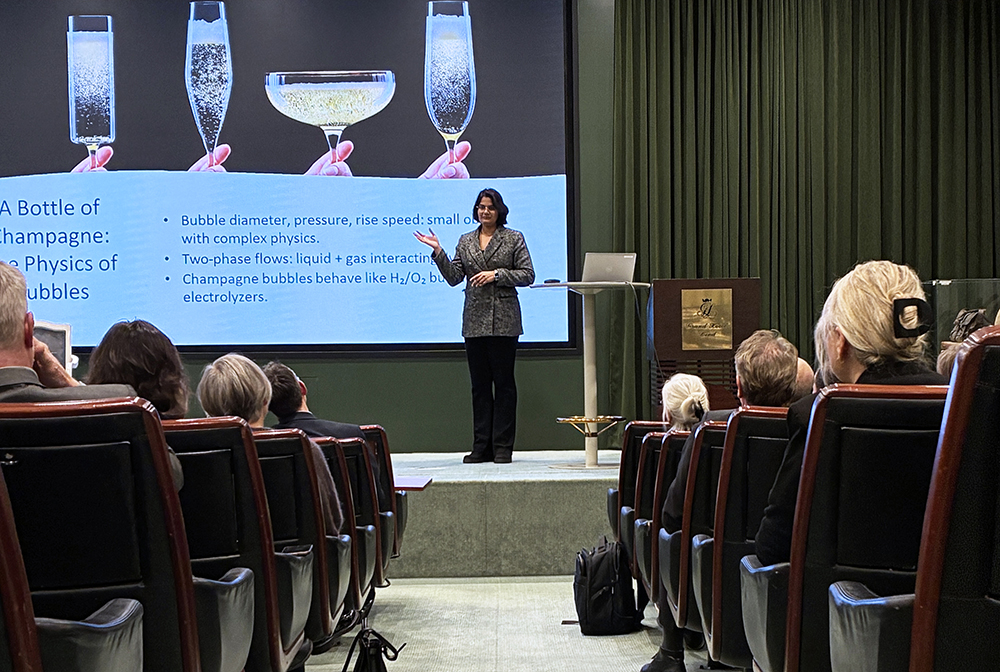
One presentation picks up where the other leaves off. Together, they give the audience an insight into the scholarship holders' research, which covers topics ranging from tick-borne diseases and a fossil-free future to how AI affects our view of our bodies. The audience includes interested members of the general public, fellow researchers, several of Lund University's deans, and the university's Vice-Chancellor, Erik Renström.
“This day offers great scientific entertainment and is also rewarding for those who want to develop their interdisciplinary thinking,” says Erik Renström, who himself was awarded funding from the Hain's foundations for his research in endocrinology in the early 2000s.
Erik Renström believes that the scholarships are very important, both for research at the university and for the shaping of the future society.
“Through their selection of scholarship recipients, the foundations showcase our diverse research, which has the potential to improve people's living conditions and contribute to solutions to global challenges.”
"...knowledge about the past can guide us about the future…"
One of the most recent foundations within the Hain family is the “Jan Hain foundation for scientific and technical research in the environment and climate” which was established in 2022.
“Thanks to the foundation’s climate and environment-focused funding, researchers have the freedom to explore new climate-smart solutions to societal challenges. The scholarships also contribute to maintaining Lund University's already strong position in sustainability,” says Annika Olsson, Dean of the Faculty of Engineering, referring to the university's recent ranking as number one in the world in sustainability.
The ranking, which involves 2,000 higher education institutions from 100 countries, is used internationally as a measure of academic quality, impact, and sustainability.
“This year’s LTH scholarship recipient, Himani Garg, a researcher in energy sciences, will play a significant role in bringing us closer to a fossil-free and sustainable society with her research focus,” Annika Olsson continues.
Another scholarship recipient in the field of climate science is Helena Filipsson, who is a professor of earth and environmental sciences.
“Her research gives us a deeper understanding of how climate change affects our oceans and how knowledge about the past can guide us about the future. Using advanced technology and collaborations, she studies marine environments in completely new ways,” says Per Persson, Dean of the Faculty of Science.
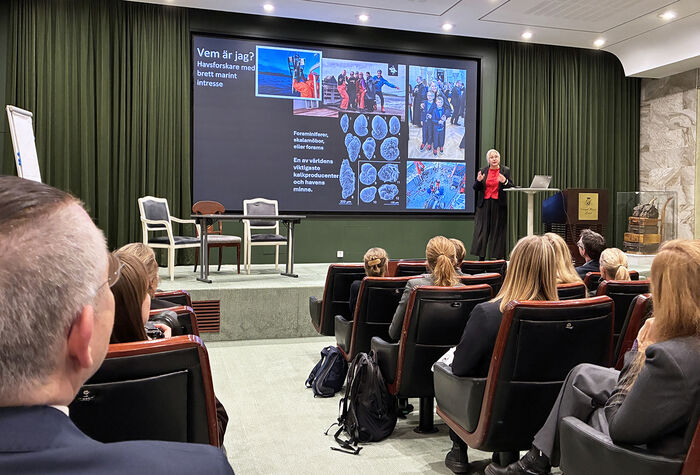
Helena Filipsson, Professor of environmental and earth sciences, receives funding for her research on how climate change affects our oceans. Photo: Jessika Sellergren
Research for better care and treatment rewarded
Hain's two foundations in the field of medicine aim to ensure that research improves the quality of care, enhances patient care, and leads to new medical treatments. This year, 12 researchers will receive funding.
Their research covers everything from dementia, depression, and child and adolescent psychiatry to diabetes, leukemia, infections, and environmental impacts on health. The researchers develop new treatments, map disease mechanisms, and work to improve care and quality of life, while studying how children and adults are affected by genetic, environmental, and social factors.
A broad range of research, notes Maria Björkqvist, Dean of the Faculty of Medicine.
“Research funding that can be used for curiosity-driven basic research is currently in short supply. These grants give our researchers a fantastic opportunity to deepen their studies and build on promising research avenues,” she says.
"...an important catalyst for the humanities..."
Hain's foundations have also been distributing funds for humanities research since the early 1990s.
“The scholarships are an important catalyst for the humanities at Lund University and have given both senior and junior researchers the opportunity to develop their projects,” says Johannes Persson, Dean of the Joint Faculties of Humanities and Theology.
One of this year's scholarship recipients is ”Lund Humanities in War and Conflict”. The research platform collects and develops knowledge about war, conflict, defense, and preparedness to contribute to a nuanced analysis and human perspective on current societal challenges.
The foundations also support interdisciplinary initiatives, including through research grants that link medicine and the humanities. This year is no exception, with funding awarded to narrative medicine and Katarina Båth. She is a researcher in literary studies and is recognized for her research on storytelling in medical education and clinical practice.
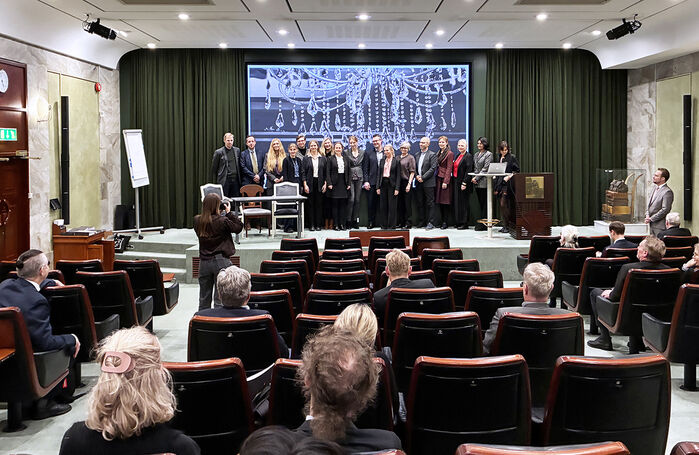
All Lund researchers who have been awarded funding from one of Hain's foundations gather on stage. Photo: Jessika Sellergren
The Hain's foundations
The Hain's foundations consist of four foundations that each year appoint one or more scholarship recipients from Lund University so that their research can contribute to new discoveries and results in the medical, humanistic, technical, and science fields.
Tor Hedendahl, chairman of the foundations since 2024, says:
“The foundations carry on a legacy of philanthropy that goes way back with the Hain family and their drive to support research that really makes a difference. Through how the foundations work, we can often help out at crucial times when funding is hard to get, and that way help research take their next steps.”
Scholarship recipients 2025
Inga and John Hains foundation for scientific humanities research
- Elzbieta Drazkiewicz – Lund humanities in war and conflict
- Magdalena Petersson McIntyre – Fashioning AI: Human and nonhuman designs
- Katarina Båth – Narrative medicine: Storytelling and stories in medical education and clinical practice
Inga and John Hains Foundation for Scientific Medical Research
- Laura Wisse – Brain imaging in dementia
- Malin Wennström – Molecular and vascular mechanisms in Alzheimer's disease: From systemic impact to translational treatment
- Daniel Lindqvist – New tailored treatments for depression
- Sebastian Albinsson – Blood vessel stretch sensors: A key to understanding and preventing vascular disease and dementia
- Charlotta Böiers – Identify key factors contributing to the onset of leukemia in children
- Ola Hansson – From molecule to treatment: Research on muscles and diabetes
Jan Hain Foundation for Scientific Clinical Medical Research
- Emma Claesdotter-Knutsson – Ear to the ground, eyes to the sky: Modern child and adolescent psychiatric research
- Joakim Esbjörnsson – Why do we get different illnesses from viral infections?
- Christel Nielsen – Children's health and development after high PFAS exposure
- Kristina Persson – Babesia and Borrelia: What happens when you get two tick-borne diseases at the same time?
- Katarina Fagher – Diabetes-related complications: Risk factors, prevention, and individualized treatment
- Eva Månsson Lexell – Enabling everyday activities for people with disabilities
Jan Hain Foundation for Scientific and Technical Research in the Environment and Climate
- Himani Garg – Hydrogen for climate-neutral fuels: A strategic initiative for Sweden's energy transition
- Helena Filipsson – Memories of the sea: Traces of climate change in microscopic shells
The links lead to Lund University's research portal.