Safety and reliability first
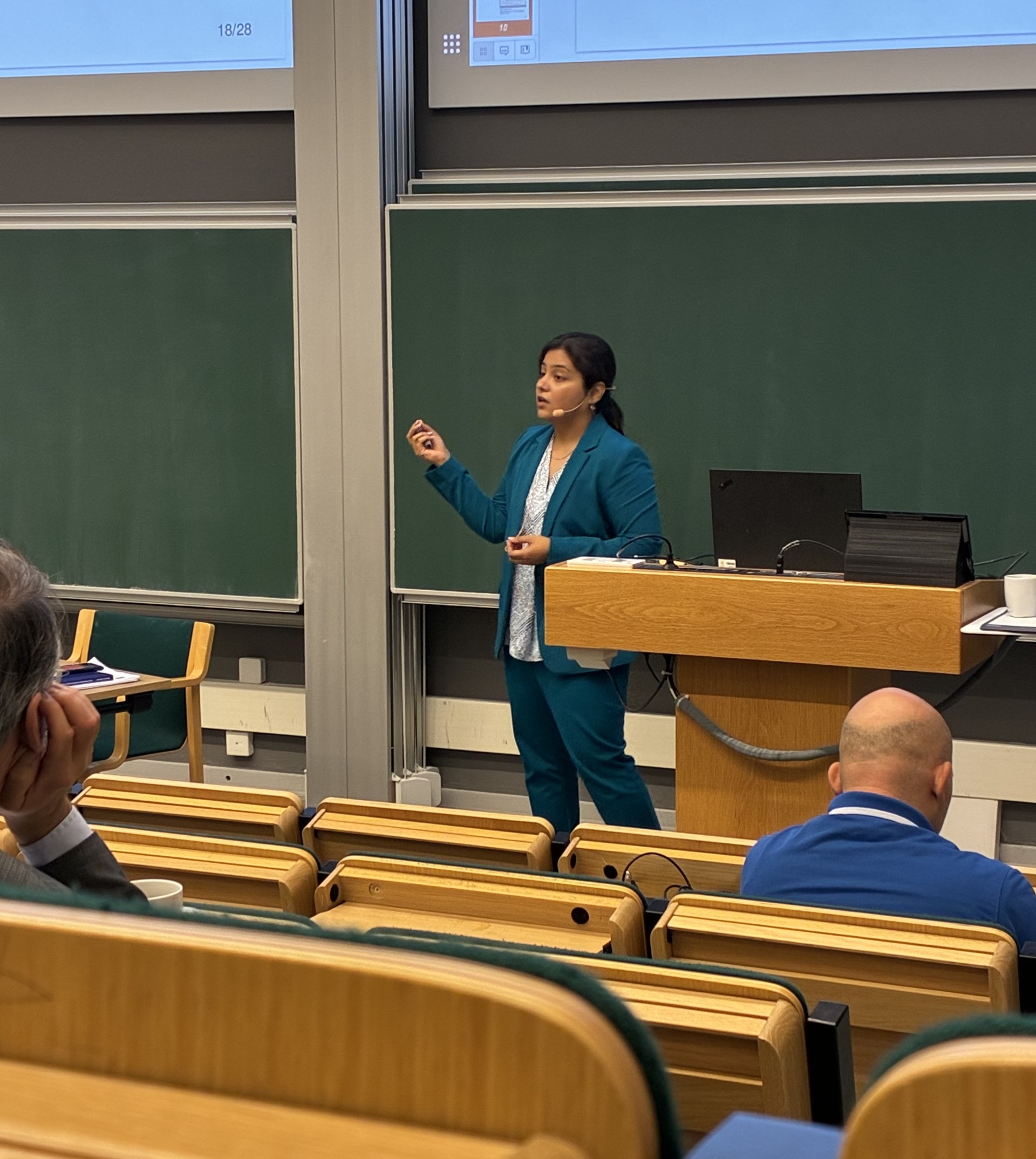
For robots to work and collaborate with humans in real-world environments, their functioning must be safe and reliable. Momina Rizwan, PhD Student in Software Development and Environments, has investigated these aspects of autonomous robots in changing environments.
Susanna Lönnqvist – Publicerad den 16 October 2025
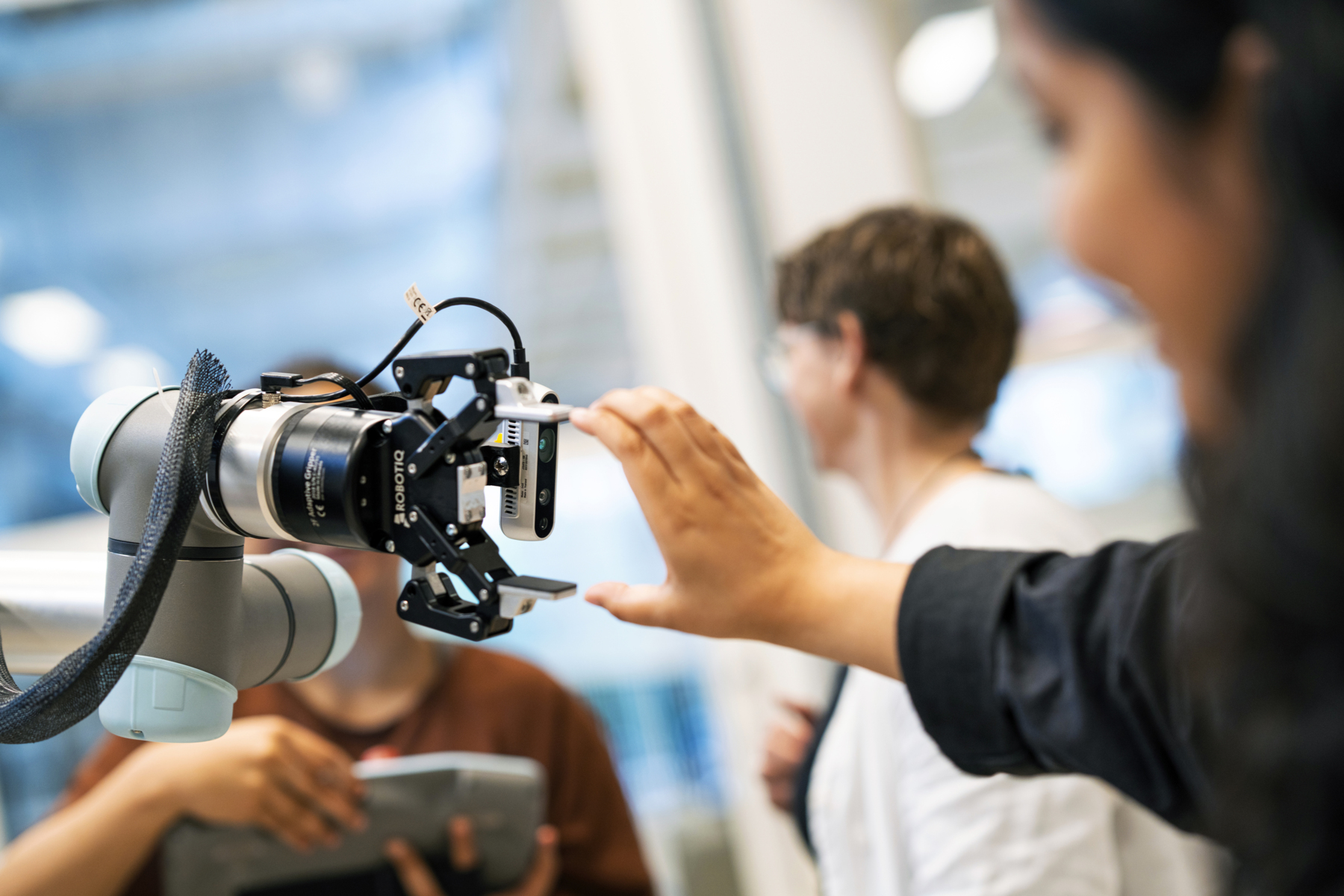
Safety and reliability are two key aspects in robotics, and particularly in autonomous robots. The autonomous vehicle is probably the most studied, but this applies to all kinds of robots intended to work in a real-world setting, alongside or with humans. As robots and robot learning evolve, focus has been placed on how optimize the behavior of the robot, where reasoning of the robot could maintain both safety and task continuity.
Momina Rizwan has looked at both functional safety of autonomous robots, and the system reliability, if the system can support the completion of an intended task. To develop and test safety features and system reliability, Momina Rizwan has developed domain specific languages (DSL), smaller programming languages for specific applications. With the aid of the DSLs she has developed safety architectures that can aid in the monitoring and adaptiveness of the robot. When this type of reasoning is enabled, it allows for adaptation of the robot’s behavior, instead of complete shut down if it is safe to do so. The research has future applications in safety and reliability development in the complete life cycle of a robot; before it is deployed, to check for errors during operations, and for adaptiveness of the robot to its uncertain surroundings in the real world.
Momina Rizwan recently defended her doctoral thesis Safety and Reliability for Autonomous Robots in Dynamic Environments. Opponent was Professor Nico Hochgeschwender, University of Bremen.