
Airing affects energy consumption – now we know how much
"High-airers" and "low-airers" have been mapped in a research study at LTH, The Faculty of Engineering at Lund University. The study examines how much we ventilate and how energy consumption in our homes is affected by airing - energy consumption can vary up to 60 times between different households.
Jessika Sellergren – Publicerad den 13 March 2026
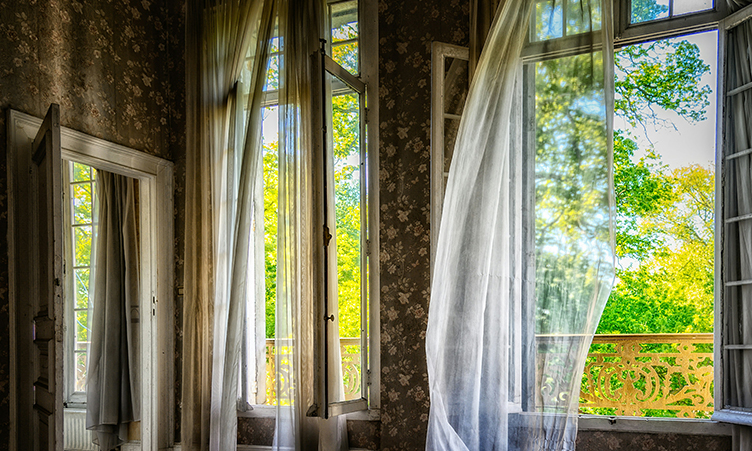
Airing can be a quick and effective way to lower the temperature and improve indoor air quality. However, airing by opening windows during the heating season means that warm indoor air escapes and is replaced by cold air from outside. To restore the indoor temperature, the heating system has to work harder, leading to higher heating energy consumption in the home.
Henrik Davidsson, researcher in Energy and Building Design, is responsible for the airing project, which is funded by the Swedish Energy Agency. He explains that the study is investigating how residents in apartment buildings and detached houses use their windows for ventilation – how much they open them, how many windows are ventilated at the same time, and at what times of the day the windows are open.
“By understanding how people ventilate their homes, we can develop better energy simulations that contribute to more sustainable and energy-efficient houses in the future,” he says.
Detailed measurements of airing habits
For the past year, Henrik Davidsson and his research colleagues have been studying 15 homes from Malmö in the south to Umeå in the north. In these homes, they have surveyed about 50 windows and doors, recording their opening times and angles. The measurements were taken using an electronic device mounted on the windows and doors that can be opened.
“We measured at the minute level, which resulted in over 500,000 data points per window per year,” says Henrik Davidsson.
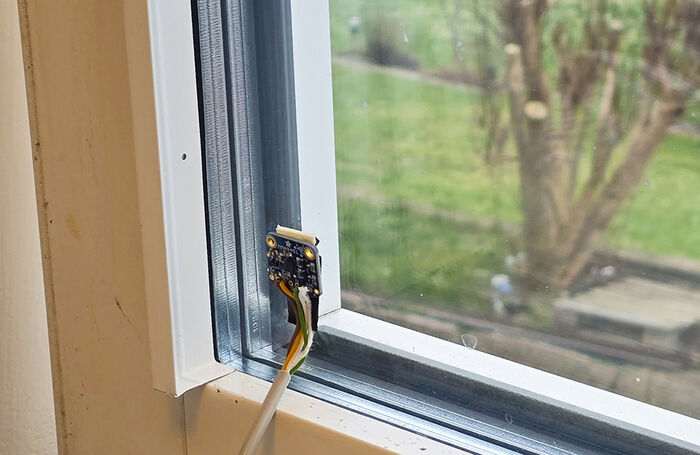
”We developed the measurement equipment as part of the project. The meter is based on two different sensors so that it works for both pivot and side-hung windows. It also has a real-time clock, a memory card writer, and is programmed to measure and save the opening angles so that they can be transferred to our analysis software,” says Dennis Johansson, researcher in Building and Environmental Technology.
The study shows that airing occurs in all homes, regardless of ventilation system and geographic location.
The measurements show that approximately 90 percent of households have air exchange-related heating energy consumption of between one and eight kilowatt-hours per square meter of floor area.
“A value that is often used today in simulations of energy use for airing is four kilowatt-hours per square meter,” says Henrik Davidsson.
Even in winter, when open windows can lead to significant heat loss, the residents participating in the project use airing in their homes for an average of 73 minutes per day.
“It’s interesting because the most energy-efficient way to airing in the winter is to open windows for short, limited periods,” says Birgitta Nordquist, a researcher in Building Services and one of the researchers on the project.
She also say that even in Umeå, the average daily opening time is 25 minutes during the winter months.
– This is despite the fact that the homes included in the project have modern ventilation systems with heat recovery, known as FTX ventilation.
Poor air quality is the main reason for airing
But why do we air our homes? In the summer, most people do so to lower the indoor temperature. During the rest of the year, it’s mainly about the need to get rid of stale air.
“The survey results show that airing during winter is primarily carried out due to perceived poor air quality,” says Birgitta Nordquist.
She explains that this points to a need to take a closer look at how ventilation in homes works and whether it truly meets the residents’ needs.
“With a properly functioning ventilation system, residents shouldn’t feel the need to air their homes in the winter,” she says.
”High-airers” and ”low-airers”
In their study, the researchers have identified different airing profiles. Henrik Davidsson describe them as “high-airers” and “low-airers.”
“Energy consumption can vary by as much as sixty times between a high-airer and a low-airer,” he says.
He explains that understanding these profiles - and the energy loss associated with their airing pattern - is essential to improving current energy simulations.
“With a better understanding of how we air, why we do so, and how it affects household energy consumption, we can develop more realistic guidelines that are useful for both new construction and energy-efficient renovations,” says Henrik Davidsson.
Better indoor environment - Airing habits in apartment buildings
The project “Better indoor environment - Airing habits in apartment buildings” has been funded by the Swedish Energy Agency.
Participating researchers:
- Henrik Davidsson, Energy and Building Design
- Dennis Johansson, Building Services
- Birgitta Nordquist, Building Services
- Victor Fransson, Building Services
- Hans Bagge, Building Physics
Airing in homes
Airing in residential buildings – measured average times
- Winter (November–March): 1 hour and 15 minutes per day
- Spring/Fall (April, September–October): 3 hours per day
- Summer (May–August): 5 hours and 15 minutes per day
Why do we air?
- Winter: The majority of residents, 44 percent, say they air their homes because of stuffy air and poor air quality.
- Spring–Fall: The majority of residents, 31 percent, say they air their homes because of stuffy air and poor air quality, and also out of habit—they usually do so as a routine.
- Summer: Most residents, 56 percent, say that it is too hot, which is why they air their homes.
Birgitta Nordquist comments on the results:
“The extent of air exchange varies, but we can see that it occurs regardless of the season or the type of ventilation system in the home,” she says.

Henrik Davidsson
Henrik Davidsson is a researcher in Energy and Building Design.

Birgitta Nordquist
Birgitta Nordquist is a researcher in Building Services and the Chair of CHIE, Centre for Healthy Indoor Environments.

Dennis Johansson
Dennis Johansson is a researcher in Building Services