
Road traffic safety
From knowledge to safer roads
Between 2004 and 2009, Lund University and LTH delivered nine rounds of the Sida-funded Road Traffic Safety programme. The programme strengthened participants’ capacity to address road safety from a systems perspective, with particular emphasis on the organisational, institutional and policy conditions needed for effective road safety management.
A total of 243 professionals from 43 countries participated. They represented ministries, transport and road authorities, national road safety bodies, police services and other organisations with responsibility for road safety. Participants came from Africa, Asia, Latin America and Eastern and Central Europe.
A central part of the programme was applying new knowledge to concrete challenges. Participants developed change projects in their own professional contexts, exploring strategies and interventions that could contribute to safer road systems.
From projects to wider transformation
Follow-up of the programme showed change at several levels. Participants reported new perspectives on road safety and their own professional roles, while some went on to assume greater responsibilities or initiate new areas of work within their organisations.
The programme also deliberately brought together participants from different organisations within the same countries. This helped establish relationships across institutional boundaries and created new opportunities for collaboration between organisations that had previously tended to work separately.
Most importantly, participant initiatives contributed to concrete changes in policy, institutions and road safety practice:
- Vietnam: Participant activities contributed to the introduction of legislation requiring children from the age of six to wear helmets when travelling by motorcycle.
- Nigeria: Activities contributed to a new road safety law requiring motorcyclists to wear helmets, as well as the establishment of a driver training institute.
- South Africa: 30 km/h zones were implemented in parts of Pretoria.
- Ethiopia: Participant activities contributed to legislation on seat-belt use.
- Malaysia: Measures were introduced to reduce speeding around schools.
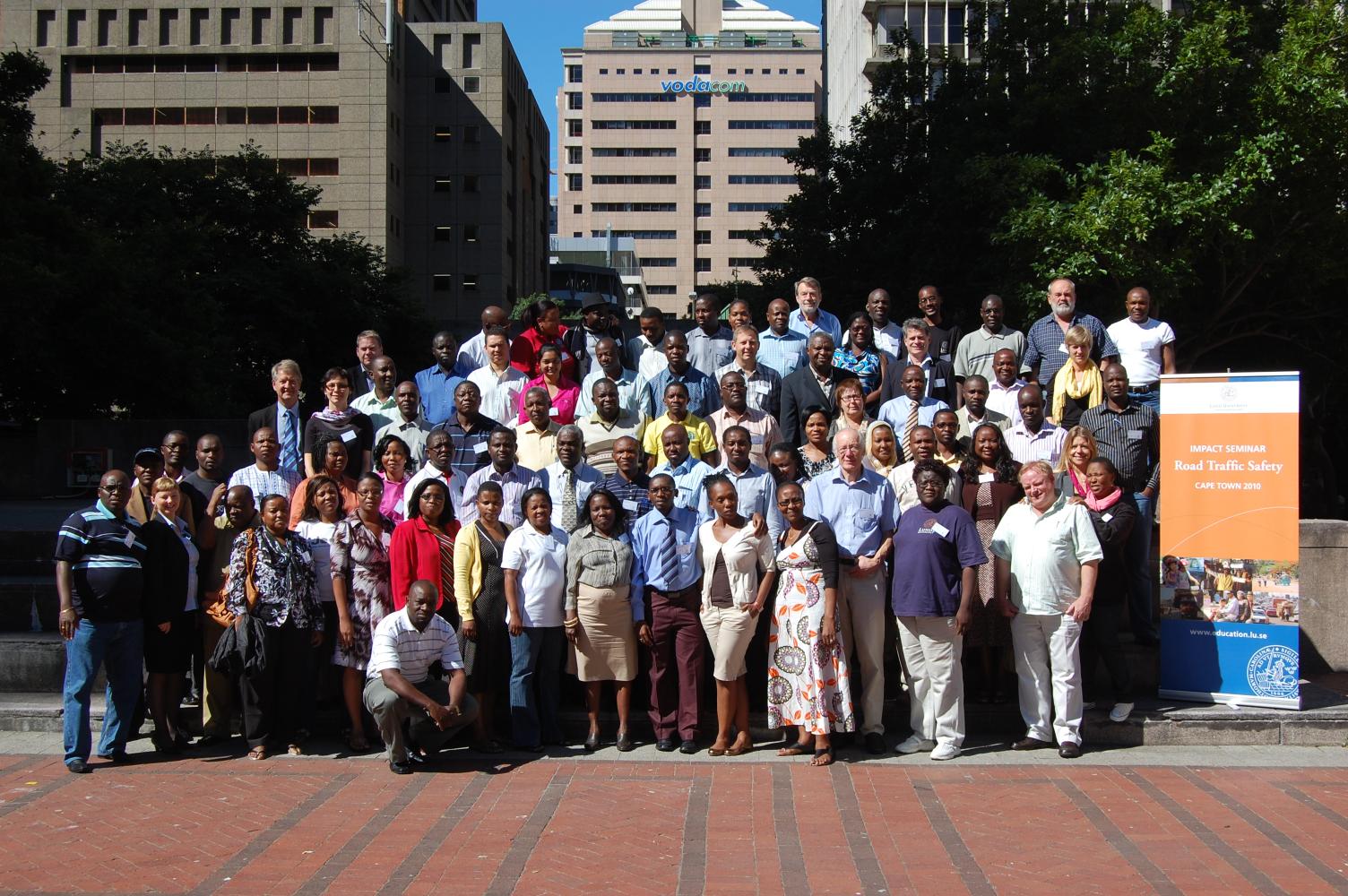
The programme also helped create networks that could sustain change beyond individual projects. In Nigeria, former participants established a national alumni network connecting professionals from different organisations and programme years. At the 2010 impact seminar, participants from other countries similarly worked together to develop national strategies and strengthen collaboration around road safety.
Why it still matters
Road safety remains a major global challenge and is recognised within the UN Sustainable Development Goals and international initiatives such as the Decade of Action for Road Safety. More than 90% of road traffic deaths occur in low- and middle-income countries.
Many effective measures for preventing deaths and serious injuries are already known. The challenge is therefore not only to develop new solutions, but to strengthen the capacity to translate existing knowledge into action and implement proven approaches at scale. This is where international capacity development can play an important role.