
"Then I saw the possibility of detecting greenhouse gases"
THE INNOVATOR. Methane is a particularly potent greenhouse gas, many times more harmful than carbon dioxide. It is therefore welcome news that LTH researcher Mattias Borg and his colleagues are developing a new type of infrared camera that can monitor methane leaks along extensive gas and oil pipelines at low cost.
Lina Törnquist and Tiina Meri – Published 2 November 2026
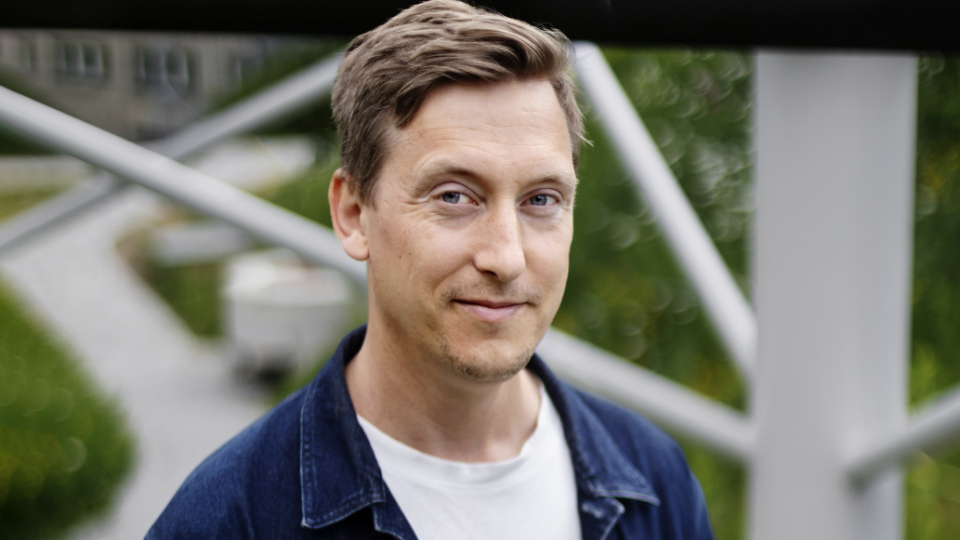
The original idea came from Mattias Borg. He realised early on that an infrared detector could be built using a new material he had developed in his research, and that it could offer a far cheaper alternative to the technology currently used to monitor and detect leaks along the large pipelines that carry oil and gas.
“I realised that if we combined the new semiconductor material with a metal, the detectors could be made not only cheaper but also better. I then spent a lot of time talking to colleagues here at LTH who work on antennas. It was the combination of our expertise that allowed us to think outside the box,” says Mattias Borg.
Unlike conventional sensors, the new ‘methane detective’ does not require cryogenic cooling, a costly process that usually involves cooling a component to below roughly -150 °C.
Important piece of the puzzle
Because methane has 84 times the impact of carbon dioxide on global warming over a 20-year period, reducing methane emissions is an important piece of the puzzle if global climate targets are to be met.
The innovation team behind the new sensor also included colleagues Johannes Svensson, who contributed valuable knowledge of infrared detectors, and Johan Lundgren, who brought specialist expertise in electromagnetism.
“I suppose it’s pretty common advice for anyone who wants to try building something new: don’t be afraid to ask for help. A good idea is worth nothing if you can’t carry it out. And for that you may need expertise from others,” says Borg.
What would you say today to a colleague who is curious about innovation?
“For me, it wasn’t always clear how to navigate the process. Research is meant to be published, whereas an innovation needs to be patented and kept fairly confidential until launch – that’s not always an easy balance. I honestly couldn’t have done it without support from LU Innovation.”
What mindset does a good innovator need?
“It’s the classic answer, really: daring to think a little outside the box, and asking whether there might be a way even when others say it can’t be done. Going beyond the established boundaries is what can give an idea an edge. So, you have to be curious and a bit inventive. And it certainly helps if you want to see your research do something positive for society.”
What drives you personally?
“I think a lot about the climate and the challenge we face, but for a long time my own research had no direct link to solving the climate problem. Then I saw this opportunity – that an infrared camera could detect greenhouse gases, and that it could genuinely make a big difference. That’s what drives me: being able to do some good.”
On a scale of one to ten, how hard was it to come up with a ‘methane detective’?
“We’ve essentially built on existing knowledge but applied it in a new way. Because the market for infrared cameras already exists, and is set to grow thanks to new EU regulations, our path has been easier than for those who have had to create a market from scratch. We don’t have to make up customers and convince them that they need an infrared camera to inspect their oil pipelines. We only have to convince them that they need our camera.”
Some say it’s ‘game over’ for the climate, given that we appear to be heading for 2.5 degrees of warming.
“If we give up, we’ll face at least four degrees of warming. I agree that we probably won’t meet the 1.5-degree target in time. But the only way to reach it eventually is through innovation: giving politicians the tools they need to stop global warming and putting pressure on them to use those tools. So much good is happening in the world, even as other forces push in the opposite direction. But giving up isn’t an option.”
So, innovation is the answer?
“Let’s put it this way: We’re not clever enough to stop consuming, and we won’t want to go back to the 1800s. So the solution has to be ideas and technology that can save us while allowing us to keep the same quality of life. Then perhaps other changes can be made gradually.”
What surprised you along this innovation journey?
“I was a little surprised by how much I knew. As researchers, we’re trained to think unconventionally, and as engineers, we have broad knowledge and can see connections. What seems obvious to us isn’t always obvious to others. Speaking to investors and customers made it clear that I had something to contribute.”
Did the innovation take time away from your research, or how did you balance the two?
“We’ve had to focus on things that benefit the innovation, and perhaps a little less on basic research than we otherwise would have. So developing the innovation has, so far, given our research a certain direction, but it hasn’t held it back. On the contrary, the research has been important in moving the innovation forward.
“Some researchers see basic research as a higher pursuit and innovation as something at odds with it. I believe the two should go hand in hand. Still, resources are limited, and we have to prioritise. With more resources, I hope to pursue basic research as intensively as I work on the innovation.”
What else should researchers and students keep in mind?
“I think many people are more afraid than they need to be of taking the first step – such as contacting LU Innovation and saying, ‘I have an idea. Can I use you as a sounding board?’”
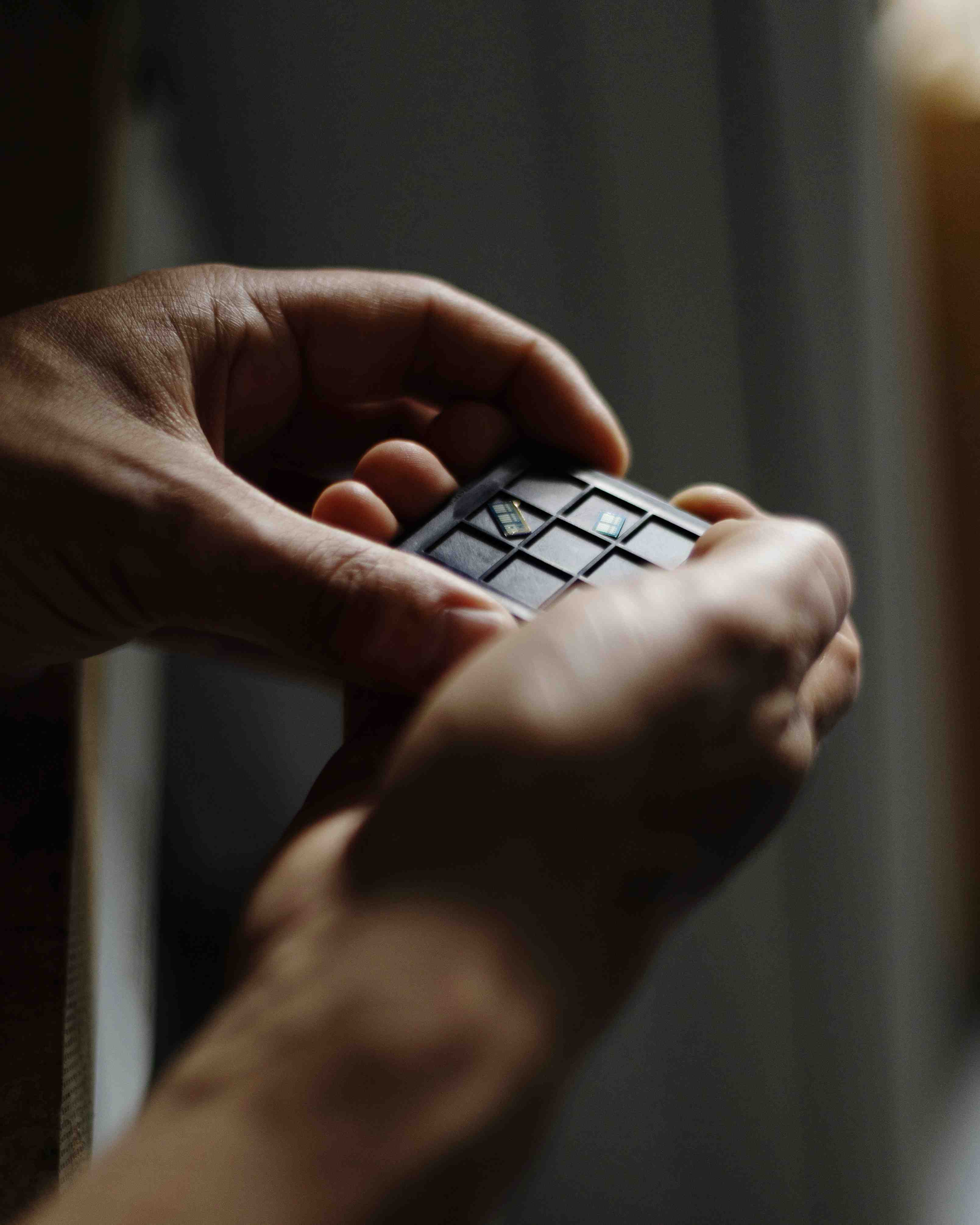
Climate gas detective
Together with Johannes Svensson and Johan Lundgren, Mattias Borg – all researchers at the Division of Electromagnetics and Nanoelectronics at LTH – has developed a mid-infrared sensor technology with the potential to revolutionise the detection of greenhouse gases.
Unlike today’s camera sensors, which require costly cryogenic cooling, this solution works at room temperature with comparable sensitivity, while also enabling more cost-effective manufacturing.
The innovation targets methane emissions. Over a 20-year period, methane has 84 times greater impact on global warming than carbon dioxide, making it a key factor in reaching global climate targets.

Award-winning innovation
The researchers behind the methane detector received support from LU Innovation, Lund University’s innovation office, to develop their innovation. In 2025, the innovation received the honourary award at the Future Innovations Award, Lund University and Sparbanken’s award for ideas with the potential to improve our world.
The research is now being commercialised so that it can benefit society. Together with LU Ventures, Lund University’s venture builder, Mattias Borg has founded Redgrove AB.