Robust and sustainable – results paving the way for the future of transport
How can Sweden’s roads become more sustainable, safer and better equipped for the future of transport? These were some of the questions addressed when the Swedish Competence Centre in Road Technology (KCV), hosted by Lund University’s Faculty of Engineering (LTH), brought together researchers, the Swedish Transport Administration and industry representatives for its first results conference in Lund.
– Published 1 October 2026
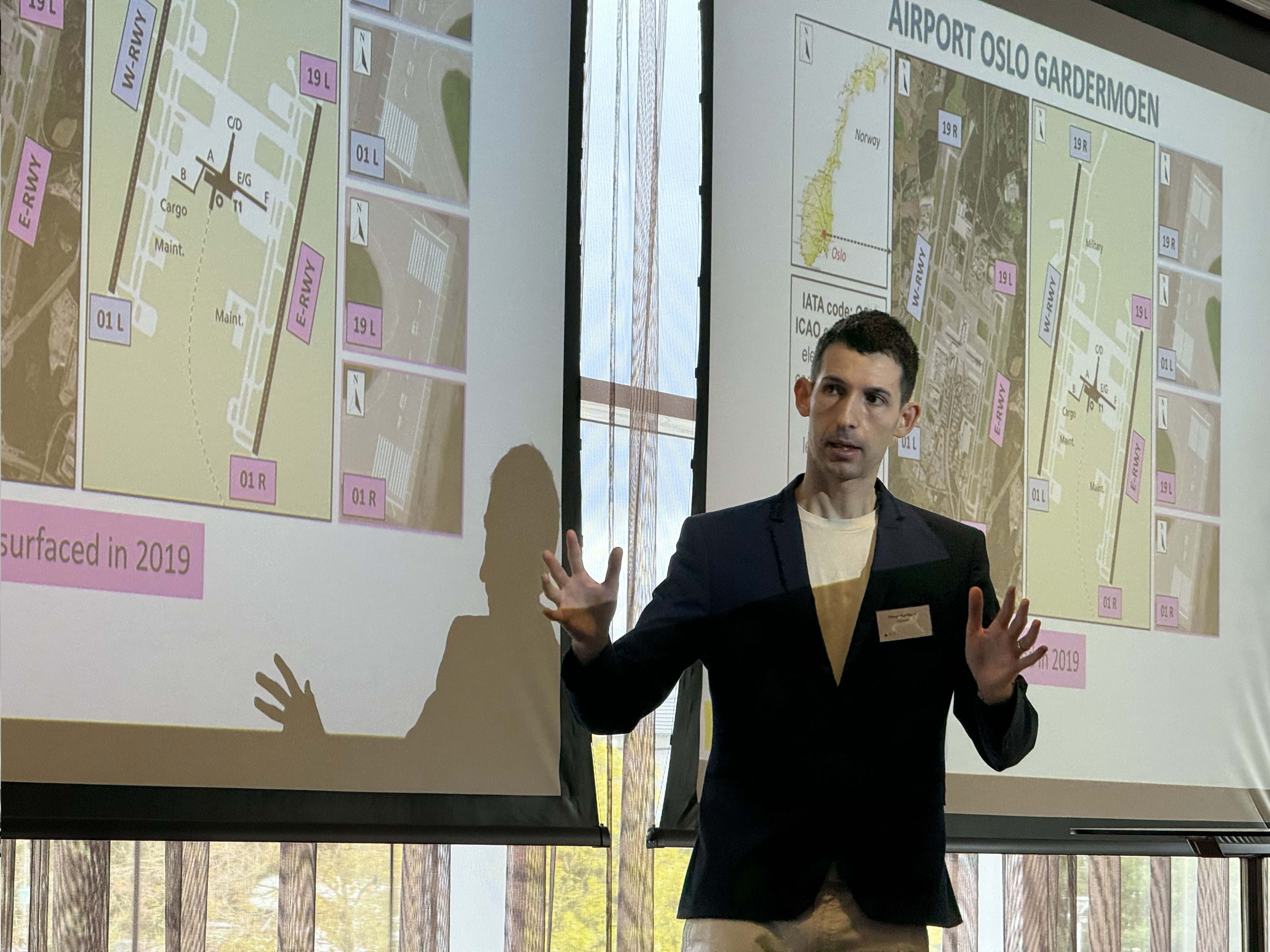
On 9–10 September, the Swedish Competence Centre in Road Technology (KCV) held its first major joint presentation of research results. During the two-day inaugural conference, results from completed and ongoing projects were presented, while researchers, road authorities and industry representatives had the opportunity to discuss their work and exchange experiences.
“Through this results conference, KCV has reached its first major milestone. Presenting results from both completed and ongoing projects while creating opportunities for networking and dialogue between researchers, road authorities and industry is important for advancing expertise and knowledge,” says Joacim Lundberg, Director of the Swedish Competence Centre in Road Technology and Lecturer in Transport and Roads at LTH.
He particularly emphasises the importance of bringing both junior and senior researchers together with those who work with roads and the challenges that the research is intended to help address.
“It helps us conduct research that is relevant to society. We are now looking forward to future networking events, and our ambition is for the results conference to become an annual event.”
From asphalt and recycling to AI
The breadth of the research was evident during the conference. Eight projects were presented, addressing questions ranging from how the quality of newly laid asphalt can be measured to how automated and electrified transport may affect the road infrastructure of the future.
- Thomas Lundberg from VTI presented research into how ground-penetrating radar and laser-based measurements of road surface texture can be used to investigate the homogeneity of newly laid asphalt. The results show, among other things, that the two measurement methods provide different types of information and need to be used separately depending on the type of pavement.
- Sigurdur Erlingsson from VTI is developing methods for using road surface data to improve VTI’s model of road wear caused by studded tyres. Modern measurement technology allows data to be collected across entire traffic lanes at normal driving speeds, which could eventually provide faster and less expensive data for modelling wear caused by studded tyres, among other things.
- Aakriti Mohanty from KTH presented research into how lignin, a natural polymer found in plant cell walls, can be used to develop more bio-based asphalt. One aim is to replace some of the fossil oil-based binder currently used in asphalt.
- Jelke Dijkstra from Chalmers presented a project that uses data assimilation and machine learning to improve assessments of road conditions. By combining advanced models with measurement data, the aim is to interpret road conditions increasingly close to real time.
- Valeri Petkov from Luleå University of Technology presented the Grusfabriken project, which investigates how excavated materials can be reused as aggregate in road construction. Automated quality assurance and more efficient logistics could enable larger quantities of material to be reused, thereby reducing both resource use and climate impact.
- Jiqing Zhu from VTI is working to identify safer alternatives to methylene chloride, a toxic solvent used in laboratory analysis of asphalt. The project has identified several promising alternatives and demonstrated that supercritical carbon dioxide can dissolve bitumen, which will now be investigated further.
- Kun Gao from Chalmers presented MATARI, a project investigating how automated and electrified vehicles could change the loads and wear placed on the road network. The researchers are developing models to assess the new demands that these developments may place on road infrastructure and its maintenance.
- Johan Casselgren from Luleå University of Technology presented research on the digital monitoring of winter road maintenance. By combining friction data from connected vehicles with weather data and information about winter maintenance measures carried out, the researchers will investigate how the quality and effects of winter road maintenance can be monitored more effectively.
Knowledge for the roads of the future
Holger Wallbaum, Deputy Head of Department and Vice Head of Department for Research at Chalmers and a member of the KCV Board, emphasises that research and innovation are needed alongside the maintenance of today’s road network.
“If Sweden is to maintain a robust and reliable infrastructure, simply maintaining our roads is not enough. We must also invest in research and innovation that develop the next generation of road infrastructure and modernise the existing system,” says Holger Wallbaum.
For the Swedish Transport Administration, the investment in KCV is partly about ensuring the long-term supply of the expertise needed to manage and develop Sweden’s road network.
“The Swedish Transport Administration faces major challenges in the coming years when it comes to maintaining and developing the road network in a sustainable way over the long term. Development is therefore absolutely essential, and KCV will play an important role through its research and by making knowledge available to the industry,” says Robert Karlsson, the Swedish Transport Administration’s contact person for KCV.
He also highlights the interaction between participants as an important part of the conference.
“For me, the conference has been invaluable in providing an overview of how the projects work and how the results will be disseminated. It has also been fantastic to see the enthusiasm and the stimulating discussions taking place during the breaks. It bodes well for the future.”
About the Swedish Competence Centre in Road Technology
The Swedish Competence Centre in Road Technology (KCV) aims to contribute to the long-term development and supply of knowledge and expertise in road technology in Sweden. Long-term funding from the Swedish Transport Administration provides the conditions for research, recruitment and investment in the equipment required to develop a robust and sustainable road infrastructure. LTH, the Faculty of Engineering at Lund University, hosts the Swedish Competence Centre in Road Technology.
A competence centre brings together partners from different sectors around a shared vision and common goals within a particular field. KCV’s partners are:
- Chalmers
- Delft
- Ecoloop
- LiU
- LTU
- LU
- LTH
- Ramboll
- RISE
- Skanska
- VTI