
From Research to Patient: Lund University Brings Together Expertise in Advanced Therapy Medicinal Products
A new report on the ATMP environment at Lund University has identified 50 so-called ATMP-enabling technologies. Many of these are based at the Faculty of Engineering (LTH), with expertise ranging from AI and biomaterials to protein engineering, cell separation, and methods for purifying the viruses used to deliver genes into cells.
Jonas Andersson – Published 5 November 2026
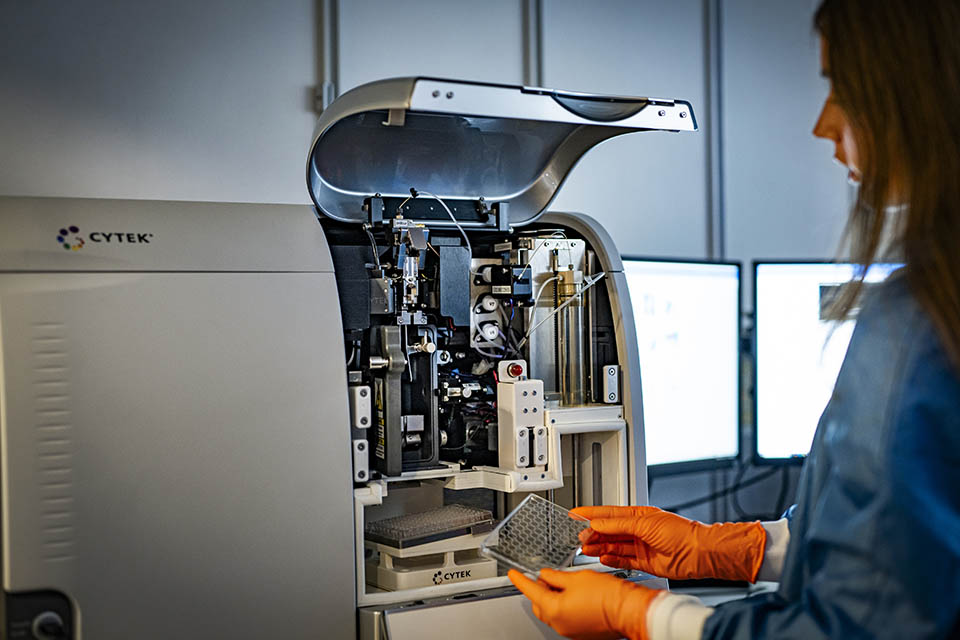
Advanced therapy medicinal products (ATMPs) include, among other things, gene and cell therapies, as well as treatments in which tissue is grown or engineered. They have the potential to treat serious diseases in entirely new ways, but are also significantly more complex to develop and manufacture than traditional drugs.
Since 2023, Lund University has operated a university-wide development center for advanced therapies, LU-ATMP, where the university brings together research conducted primarily at the Faculty of Medicine and LTH. The university also collaborates closely with Skåne University Hospital.
In a new report, LU-ATMP has mapped the technical expertise at LTH that can contribute to the development of advanced therapy medicinal products (ATMPs), which also includes technology not originally developed specifically for ATMPs. This highlights the role that engineering can play in this development.
The survey identified 50 research groups at LTH that possess technologies already in use—or that could be used in the future—for the development and production of ATMPs. The survey is a report on technical expertise and potential areas of application within ATMP development. It does not, therefore, describe the results of a single study.
“ATMPs represent a wide range of diverse and complex applications. These require various technology-based solutions to be applied effectively in healthcare, and LTH can contribute these solutions with its technical expertise,” says Mats Ohlin, professor of immunotechnology at LTH.
The scope is broad. Of the 50 technologies, 21 are in chemistry, nine in immunotechnology, and seven in biomedical engineering. The remainder are in physics, mathematics, control engineering, computer science, and mechanical engineering. These include, among other things, AI and machine learning, biomaterials, biosensors, protein technology, immunology, image analysis, and various techniques for separating cells and molecules.
From Promising Research to Effective Treatment
One of the major challenges with ATMPs is taking the step from a promising treatment in the laboratory to something that can be produced safely and reproducibly and ultimately benefit patients. For example, cells must be able to be frozen, stored, and thawed without losing their properties. Genes must be able to be introduced into the correct cells, and manufacturing needs to be scalable and automatable without compromising quality.
Here, engineering techniques can serve multiple functions. Of the 50 identified techniques, 20 can be used in basic research and early development, and 21 in the translational or preclinical phase—in other words, from the lab to the clinic. Eight are relevant to pre-GMP—the phase in which manufacturing methods are developed, tested, and adapted in preparation for the regulated production of pharmaceuticals—while one is focused on GMP production, that is, the quality-assured and strictly regulated manufacture of pharmaceuticals for use in patients.
Eight of the technologies are already being used directly in ATMP projects. Four are related to gene therapy and four to tissue engineering. These include methods for the purification of viral vectors, gene delivery, the development of biomaterials, and engineered tissue for organ regeneration.
New environments will facilitate the path from research to manufacturing
“There is no doubt that we can also utilize technological advances that were originally intended for entirely different applications in this type of treatment. With its broad expertise, LTH can help ensure that such technologies can also bring ATMP-based therapies into clinical practice,” says Mats Ohlin.
According to the report, there are likely additional technologies at both LTH and other parts of Lund University that can contribute to this development. The hope is that this survey will raise the profile of this technical expertise and foster new collaborations between engineers, medical researchers, and clinicians.
At the same time, the infrastructure is being built to advance these treatments. Lund University and Skåne University Hospital have established pre-GMP and GMP environments designed to facilitate the transition from research to manufacturing for clinical trials. Together with the technologies being developed at LTH, this will help bridge the gap between the laboratory and the patient.
“All ATMP development at the Faculty of Medicine requires new technical solutions for the manufacturing process and/or analytical methods. These solutions are often found among the researchers at LTH. Closer collaboration and joint development are needed, and we believe this report will foster and promote such collaboration,” says Anna Falk, professor at the Stem Cell Center and director of LU-ATMP.
The Report
Maria Nordin, associate professor at the Department of Biomedical Engineering at LTH and head of the BioMicroSystems research group, is the lead author of the report.
The report ATMP-Enabling Technologies – a Pipeline Report (PDF)
What is Pre-GMP?
Many ATMPs originate from academic research. To facilitate the transition from discovery in the research laboratory to new treatment therapies for patients, the manufacturing process must be adapted from research protocols to cleanroom protocols so that the medical product complies with Good Manufacturing Practice (GMP). This translation takes place at a so-called pre-GMP facility at Lund University; the actual manufacturing of drugs to be tested in humans then occurs at the cleanroom facility of the ATMP Center at Skåne University Hospital.