
"Few places have two world-leading facilities like these"
On 20 October, MAX IV celebrates 10 years of accelerating science and 40 years since the founding of the laboratory’s predecessor, Max-lab. Sara Blomberg is one of the LTH researchers who uses MAX IV’s intense X-ray light and various beamlines to answer questions about sustainable materials, and who believes that ESS will further strengthen Lund’s position at the forefront of global research.
– Published 15 October 2026
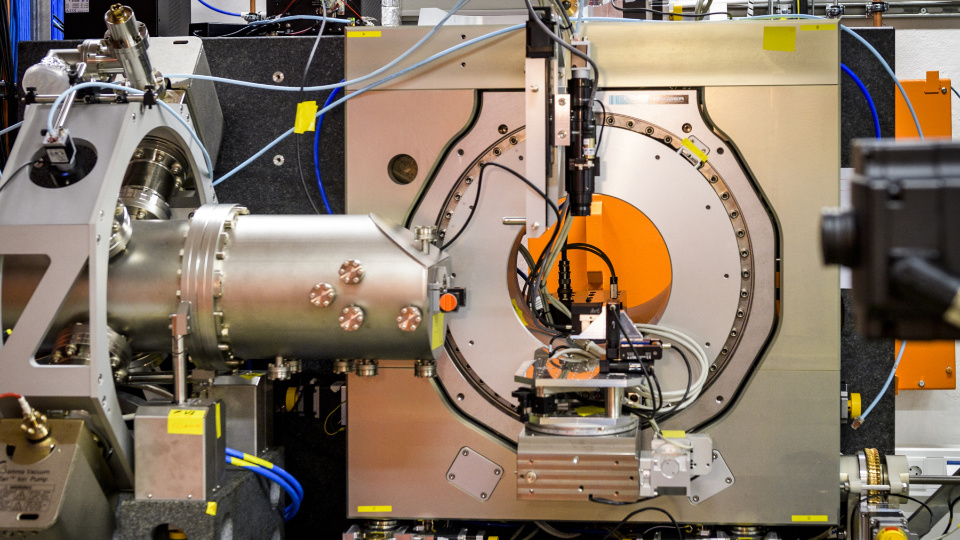
With one of the world’s most powerful synchrotron light sources within cycling distance, researchers at LTH and across Lund University undoubtedly enjoy something akin to a competitive advantage. Soon, ESS will also open, offering new opportunities to explore how atoms and molecules interact with radiation, with benefits for areas such as the development of new materials, drug discovery and cultural heritage research.
One of the LTH researchers using MAX IV is Sara Blomberg, Associate Professor in the Division of chemical engineering and a researcher affiliated with both NanoLund and CESTAP, the latter being a national competence centre working towards the transition of both the aviation and energy sectors to 100 per cent sustainable fuels.
Do you spend all your days at MAX IV?
“No, it does not work that way. We apply for beamtime and then come to MAX IV for a few days to carry out measurements. However, a large part of my research and many of the results we publish are based on data obtained at MAX IV. A great deal of time is spent preparing experiments beforehand, and afterwards we have a vast amount of data to process.”
What are you hoping to discover with the help of that relentless light?
“We are looking for atomic-level relationships that reveal how atoms need to be arranged within a material for it to be as efficient as possible. In short, we study the structure of materials used as catalysts.”
How is that done in practice?
“We take measurements while the catalyst is active. What is special about MAX IV is that we can observe these relationships and behaviours while the catalyst is actually taking part in a chemical reaction. We can follow the process in real time and identify the structures present in the material during key stages of the reaction. As we gain a deeper understanding of the reaction, we can use that knowledge to develop new materials with the desired properties at different stages.”
What does the sample look like when you test it at the various beamlines?
“We usually arrive with a metal powder possessing catalytic properties. We investigate different compositions by combining various metals. As soon as we add slightly more or less of one element, the properties can change dramatically. The difference is so significant that it is almost like creating an entirely new material.”
Do you see anything major on the horizon within your field of research?
“It is exciting that ESS will soon open for research, and I am eager to see what experiments can be carried out across both facilities. I believe ESS will enable us to make even greater use of the capabilities offered by MAX IV. We now understand much better how to perform these measurements, and with the help of both facilities we will be able to follow chemical processes more precisely. I also think we are beginning to discover opportunities for time-resolved and spatially resolved studies that we have not had before. This could provide significant opportunities for cutting-edge research and further development here in Lund.”
You mean that researchers will become more skilled at using MAX IV and ESS?
“Yes. It takes time to learn how measurements should be carried out most effectively and then to understand and analyse the resulting data. Because this is frontier research, we sometimes obtain results and datasets that we do not immediately know how to interpret, simply because no one has measured them before. One positive aspect is that my colleagues and I have frequent meetings with researchers and staff at MAX IV. We have known each other for a long time, so we do not only meet during beamtime. Regular interaction and continuous learning are essential.”
You’re ‘MAXing out’ together, so to speak?
“It is not only the synchrotron and the technology that matter; we also need the environment and expertise surrounding the sample itself. The close collaboration we have built with MAX IV is therefore extremely valuable. Experienced users can also act as sounding boards and sources of inspiration for colleagues who are interested in starting to use MAX IV.”
What does ESS offer as an ‘extra’ for your work?
“ESS neutrons are particularly useful for studying light elements such as hydrogen, which is highly relevant to our research but can be difficult to investigate using the X-rays available at MAX IV. For example, when studying biomass, ESS may provide more information about the structure of the biomass itself and how it interacts with the catalyst. However, a certain amount of trial and error will be needed before we know how to generate data that we can fully understand and interpret. I believe MAX IV and ESS will strengthen one another and give rise to many new ideas. Not many places in the world have two world-leading research facilities located so close to each other.”
At MAX IV, Sara Blomberg primarily works at the Balder beamline, but she also conducts research at Hippie, Species and NanoMAX.
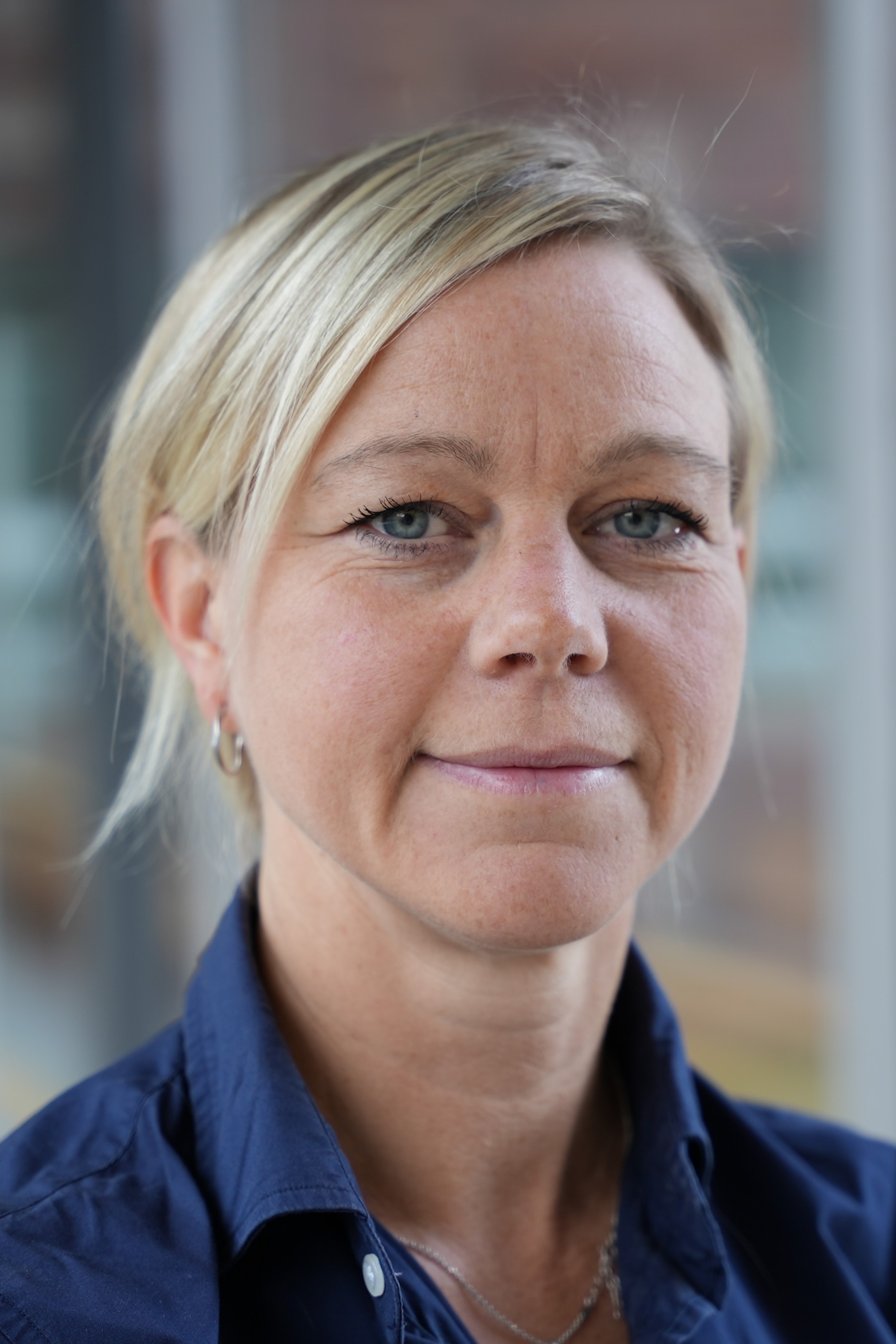
Sara Blomberg
Sara Blomberg is an Associate Professor in the Division of Chemical Engineering at LTH and a researcher affiliated with NanoLund and CESTAP.
More about MAX IV
MAX IV is one of the world’s leading synchrotron radiation facilities. It was inaugurated in 2016 and today operates 16 beamlines, serving around 2,000 users annually.
Together with ESS, which will be the world’s most powerful accelerator-based neutron source, MAX IV is expected to help establish north-eastern Lund as a centre for breakthrough research, cutting-edge technology and innovation in fields including materials science and the life sciences.
More about the anniversary celebrant (on the MAX IV website, in English)