
Clear population growth seen in places that have gained rail services
The introduction of rail services to a locality leads to a clear increase in population, according to a study in which researchers from K2 and LTH have examined the long-term socioeconomic effects of 44 railway station openings in Swedish regions.
Anna Maria Erling – Published 17 July 2026
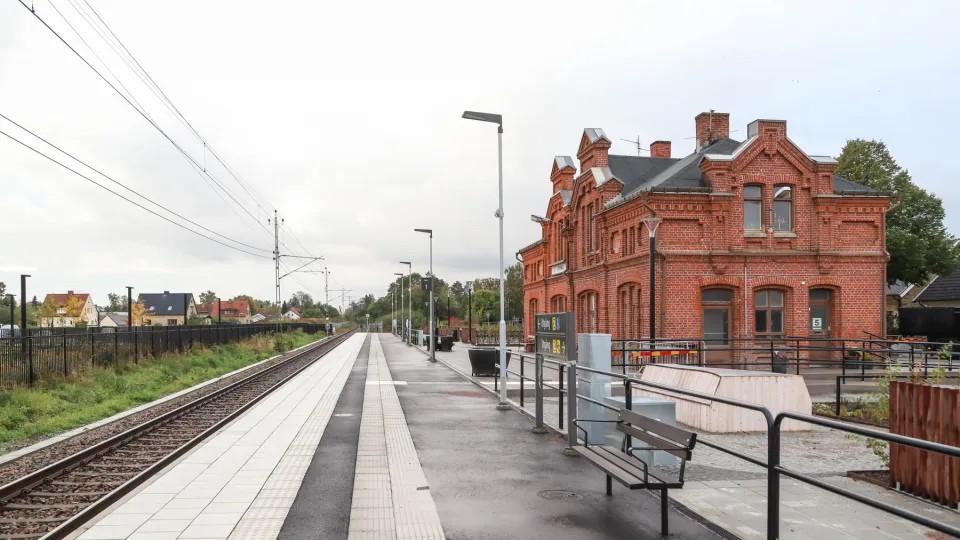
The researchers investigated what has happened over a twenty-year period in 44 Swedish communities that gained rail services in the 1990s, compared with similar places that did not. The aim was to determine whether rail services affect where people choose to live, and whether income levels, educational attainment and/or unemployment in a locality change when it gains rail services.
The results show that the population increased by around 20 per cent in places that gained rail services, compared with those that did not. At the same time, the share of residents with post-secondary education rose by just under six percentage points, and unemployment by approximately three percentage points.
“However, we see no significant effect on incomes or productivity. The railway stations therefore drive a redistribution of the population within a region, so that more people move to places with rail services from those without. But there are no signs that this leads to increased overall productivity”, says Carl‑William Palmqvist, Associate Professor at LTH and researcher at K2, who conducted the study together with Alexandra Rojas Mullor and Rosalia Camporeale at LTH.
“More of the same” for these places
For the most part, the places experienced “more of the same” in terms of their populations. Places that already had high incomes attracted more new residents with high incomes, while places with lower incomes saw an influx of residents who also had lower incomes when the stations opened. Population growth was relatively large in lower-income places compared with wealthier ones, which was not entirely surprising to the researchers, although the difference was relatively large.
The study’s findings may be relevant for regions and municipalities considering opening additional stations for local and regional rail services, as well as for the Swedish Transport Administration when considering whether new stations should be opened and how they should be co-financed, says Carl‑William Palmqvist.
“These issues may become particularly important and take on new significance as we enter a period of declining population due to low birth rates and low immigration”, he says.
He hopes to contribute to a more evidence-based discussion on the opening of new stations and service provision in smaller localities in the future.
“Regional enlargement has been, and still is, a strong trend and vision in Sweden, and we hope to contribute relevant knowledge to ensure that it develops in a sound way.”
Complexity in the findings
At the same time as the results show that railway stations were associated with significant and lasting growth in population size and total earned income, other, more complex socioeconomic changes were also observed.
“On the one hand, the results indicate a somewhat higher level of education in places that gain rail services, but also somewhat higher unemployment. The effects are somewhat contradictory, but they are likely to concern different people and partly different places. The confidence intervals for population growth are also quite large, particularly when comparing places with different income levels. The socioeconomic changes that follow a station opening are therefore somewhat difficult to predict in individual cases”, says Carl‑William Palmqvist.
Link to the study:
The socioeconomic impact of train stations: evidence from a 20-year study in Sweden – K2