Second term for EU's Scientific Advisory Board on Climate Change – LTH-professor continues
The European Scientific Advisory Board on Climate Change is entering a new phase as its first four-year term ends in March 2026. The Council's new members have now been announced, and Lars J Nilsson, Professor of Environmental and Energy Systems at LTH, will continue to be one of the representatives.
Jessika Sellergren – Published 18 December 2025
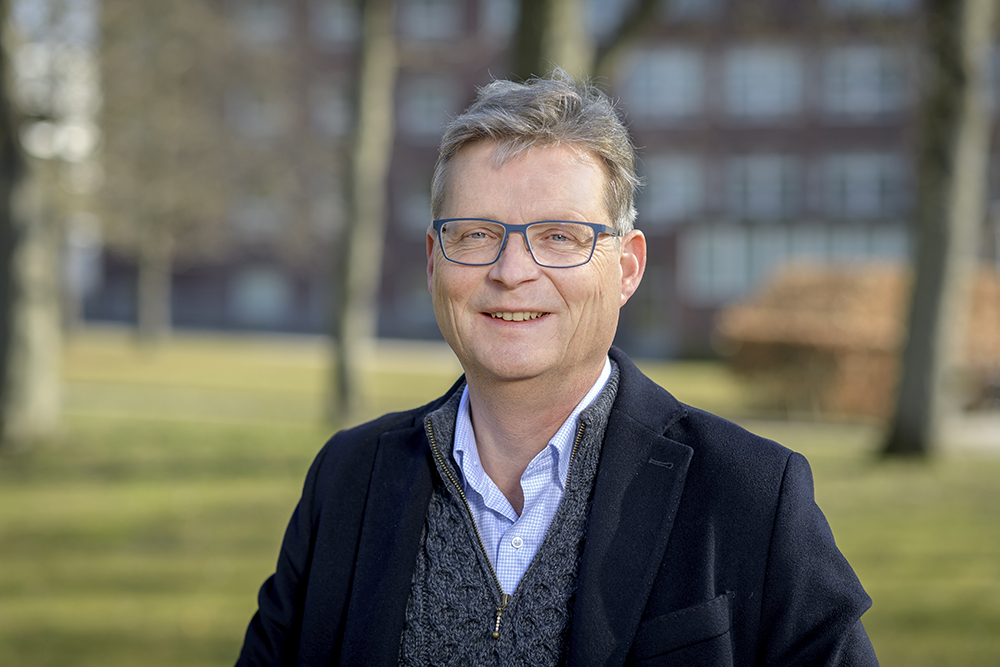
The European Climate Advisory Board, ESABCC, plays an important role in monitoring and contributing to the development of European climate policy. The core of the advisory board's work is to convey the best possible scientific knowledge that can form the basis for well-founded political decisions, explains Lars J Nilsson.
“My role in the scientific advisory board is simply to share my research experience and knowledge,” he says.
One current issue is the EU's climate targets for 2040.
"The scientific advisory board recommended a 90–95 percent reduction in emissions within the EU compared to 1990 levels, which has become an important benchmark in the political discussion. The recently concluded negotiations settled on 90 percent with some flexibility for international credits, up to a maximum of five percent.
Lars J Nilsson explains that flexibility means that a limited part of the emission reduction may be achieved through international climate measures. This means that the entire 90 percent reduction does not have to be achieved within the EU alone.
Since 2022, ESABCC has published several reports that have had a major impact and contributed to high climate ambitions within the EU. Two further reports will be published in the spring, one focusing on the role of agriculture in climate change and one on climate adaptation.
When the new scientific advisory board takes office in March 2026, one of its first tasks will be to draw up a joint work program for 2026–2027.
“The exact priorities have not yet been determined, but there are still many important questions surrounding how we will eliminate the last remaining emissions after 2040 or compensate through carbon dioxide removals,” says Lars J Nilsson.
The European Scientific Advisory Board on Climate Change – Members from 2026
- Annela Anger-Kraavi (Estonia) – University of Cambridge
- Constantinos Cartalis (Greece) – National and Kapodistrian University of Athens (second mandate)
- Suraje Dessai (Portugal) – University of Leeds’ School of Earth, Environment, and Sustainability (second mandate)
- Laura Díaz Anadón (Spain) – University of Cambridge (second mandate)
- Ottmar Edenhofer (Germany) - Potsdam Institute for Climate Impact Research (second mandate)
- Vera Eory (Hungary) – Scotland’s Rural College (second mandate)
- Lena Kitzing (Denmark / Germany) - Technical University of Denmark (second mandate)
- Kati Kulovesi (Finland) – University of Eastern Finland
- Lars J. Nilsson (Sweden) – Lund University (second mandate)
- Åsa Persson (Sweden) – KTH Royal Institute of Technology’s Climate Action Centre
- Keywan Riahi (Austria) – International Institute for Applied Systems Analysis (second mandate)
- Jean-François Soussana (France) - French National Research Institute for Agriculture, Food and the Environment (second mandate)
- Giorgio Vacchiano (Italy) – University of Milan
- Detlef van Vuuren (The Netherlands) – PBL Netherlands Environmental Assessment Agency
- Zinta Zommers (Latvia) – University of Toronto
The European Scientific Advisory Board on Climate Change
The European Scientific Advisory Board on Climate Change consists of 15 scientific experts. Members are appointed for a four-year term, which can be renewed once. No more than two members of the advisory board may be nationals of the same member state.
In the new term of office, which begins on March 24, 2026, six new members will join, while nine from the current board will continue their work, including Lars J Nilsson. Another Swedish researcher, Åsa Persson from KTH, will also take a seat on the advisory board during the next term of office.
Read more about the European Scientific Advisory Board on Climate Change and its members in the European Environment Agency (EEA) press release:
https://www.eea.europa.eu/en/newsroom/news/new-european-scientific-advisory-board-on-climate-change-appointed
Lars J Nilsson
Lars J Nilsson is a Professor of Environmental and Energy Systems Studies at LTH and conducts research on technical possibilities, strategies, and policies for the transition to a fossil-free economy.
Read about Lars J Nilsson in Lund University's research portal