
For the good of the code reviewer
Code review is somewhat of a hidden activity, but wherever software is written today, code review also takes place. One estimate suggests that as many hours are spent on code review worldwide as people spend watching television. Lo Gullstrand Heander’s research explores how code reviewers can best be supported in their work.
Susanna Lönnqvist – Published 6 October 2025
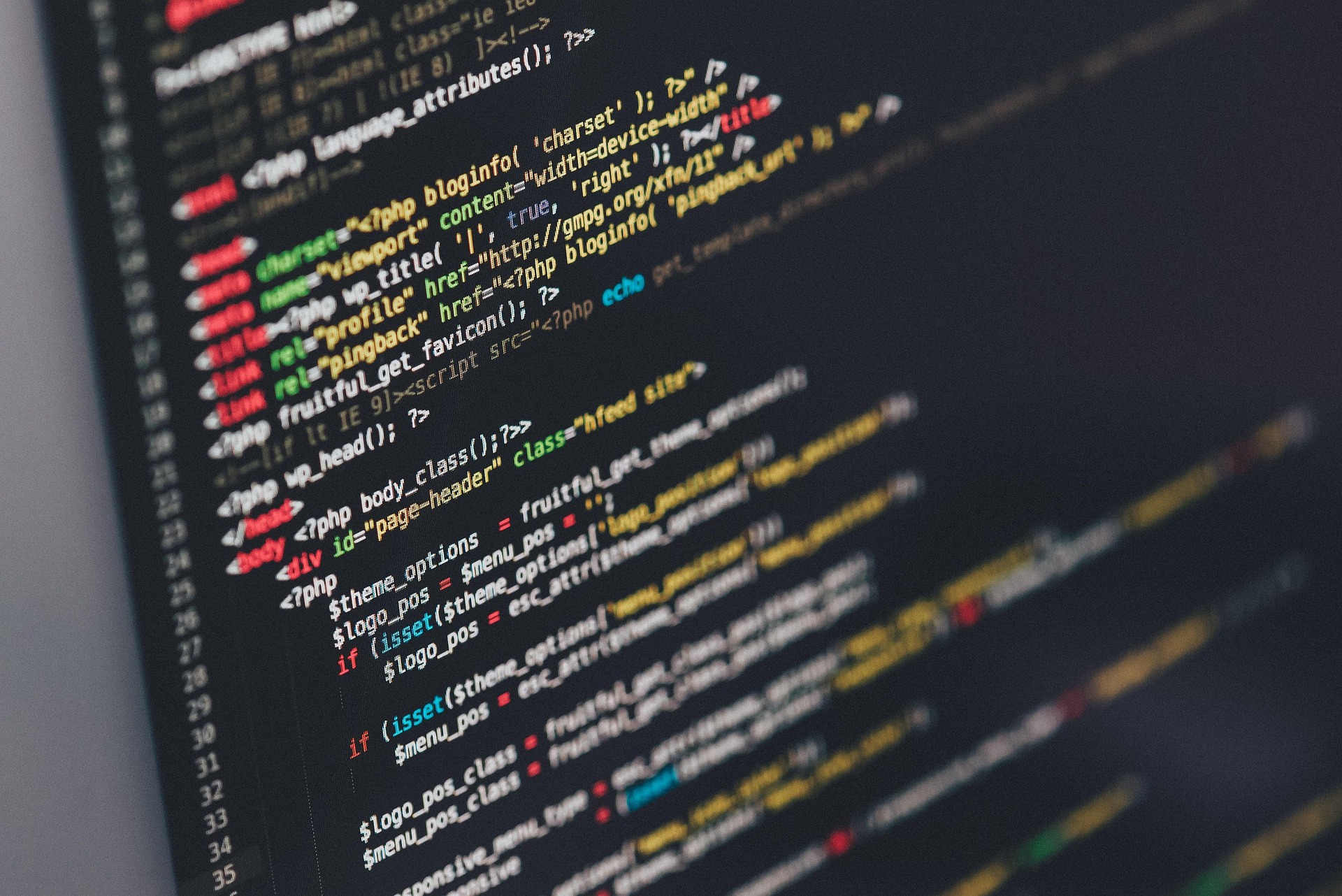
When a software developer creates a feature in a product, or modifies part of the code to fix a bug, the code is sent to a review tool for other developers to evaluate. Reviewers then comment and vote on the next step in the development process. When code review was first described in academic literature in 1979, the practice involved printing code on paper, and going through it manually in formal meetings. Today, 95 percent of software companies use one of the five major code review tools on the market.
“Tools for creating code have developed enormously in recent years, but code review tools have remained almost unchanged. This has created a major gap between the needs of code reviewers and the functionality that review tools can offer,” says Lo Gullstrand Heander, doctoral student in Software Engingeering and Environments at the Department of Computer Science.
As coding tools have advanced—particularly with AI enabling automatic code generation and comprehension—the response from both industry and academia has been to automate code review as well.
“With AI-based code review, there are two possible paths: either to design systems where AI takes over the tasks entirely, or to build systems where AI supports the human reviewer in the best possible way,” says Lo Gullstrand Heander.
Lo Gullstrand Heander’s research focuses on the social aspects of code review, and raises concerns that the positive social effects of the process risk being lost if it is fully automated. For the licentiate thesis research, ethnographic studies were conducted at a software company, including observations and interviews with code reviewers, to gain insight into what goes on in a reviewer’s mind during the code review process. The findings strengthens the image of that code review to a large extent is a social activity, involving substantial information exchange where behaviors and decision-making are shaped by expectations, team culture, and social interaction. The researchers have now developed a description of code review based on the mental processes of reviewers. This model can deepen the understanding of the review process itself, guide the development of new tools, but also serve as a foundation for decision support for both humans and AI.
Understanding and profitability
The researchers propose a prototype for a code review system where multiple small AI models work together to support the reviewer. To contribute effectively, an AI system must first be trained, and smaller models require less energy and resources than a large language model—both in training and in use. The quality of the review results may also improve, since a small model can specialize in a particular task, such as code comprehension or reading bug reports.
Effective code review practices and well-functioning development teams lead not only to better code quality and improved working conditions for developers, but also to greater profitability:
“Annual industry reports show that development teams with strong code review practices deliver up to 50 percent more product value compared to teams without an effective review process. The effects are so significant that they cannot be explained solely by technical code quality, which is why it is important to study code review and its interpersonal aspects with social science methods,” says Lo Gullstrand Heander.
The next step in the research is to develop small-scale AI-supported review systems and test them in industrial settings. Lo Gullstrand Heander and colleagues are also interested in further exploring the strategies reviewers use to handle challenges in their work—such as both a lack and an overload of information.
