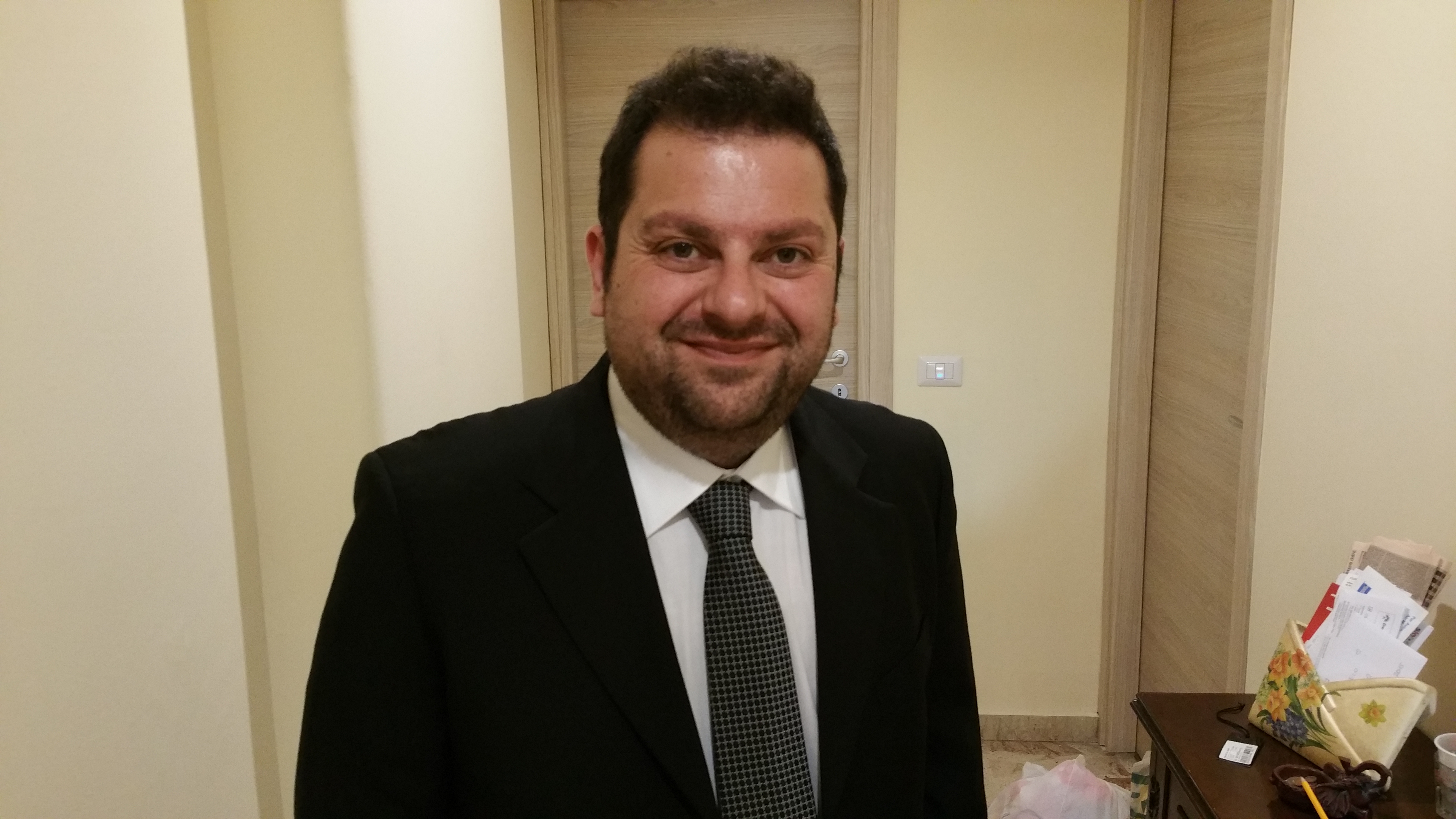
Carmelo D’Agostino receive ERC Proof of Concept grant
Carmelo D’Agostino, a researcher in traffic safety and behaviour, and stem cell researcher Paul Bourgine receive ERC Proof of Concept grants for their research into developing a new method for traffic safety assessments and finding new accurate models for testing immunotherapies in cancer treatment.
Jonas Andersson – Published 9 July 2025
The European Research Council's Proof of Concept is awarded to researchers to investigate the commercial potential of their research. All of them have previously received ERC Starting Grants. The funding is part of the EU's Horizon Europe research and innovation programme.
Carmelo D'Agostino, a researcher and team leader in traffic safety and behaviour at LTH, is receiving the grant for his SafeMoVE project.
Congratulations! Can you tell us a bit about your project?
"Thank you! The project is called SafeMoVE, and it builds on the scientific advances of my ERC Starting Grant, SUperSAFE. We are developing a universal, proactive methodology for traffic safety assessment—especially for complex, mixed traffic scenarios involving automated vehicles, vulnerable road users, and conventional drivers. Rather than relying on past crash data, we use cutting-edge tools like drone footage, simulations, and machine learning to detect near-miss events and dangerous interactions before accidents happen. This approach can help identify and fix safety issues early, making our roads safer and more adaptive to future mobility systems."
What do you hope to achieve with your research?
"We want to change how road safety is assessed—shifting from reactive methods based on crash history to proactive evaluations that prevent accidents before they occur. Our ambition is to provide policymakers, engineers, and car manufacturers with scalable tools for evaluating the safety of new vehicle technologies and infrastructure designs, even before deployment. Ultimately, we hope this will support the EU’s Vision Zero goal of eliminating road fatalities by 2050."
What does the ERC Grant mean to you?
"The ERC PoC Grant is incredibly meaningful. It allows us to bridge the gap between academic research and real-world application. With this support, we can move from scientific theory to market-ready solutions that could have a tangible impact on road safety policies, automotive development, and urban planning. It’s also an opportunity to build strong partnerships with industry and public sector stakeholders."
What is the practical use of the results?
"Our methodology can be used to evaluate the safety of roads, intersections, or vehicle systems—without waiting for crashes to happen. This is especially critical for connected and automated vehicles, which challenge traditional safety evaluation methods. Practical applications include safety audits for cities, virtual testing for vehicle manufacturers, and policy assessments for transport authorities."
Why are these results so interesting?
"Because they offer a completely new lens on road safety. By analysing interactions and near-misses using surrogate safety measures and Extreme Value Theory, we can uncover hidden risks and make interventions where they are most needed. This proactive perspective is especially timely as cities and industries adapt to automation and increasing traffic complexity."
What is the most important finding of the study so far?
"One of our key insights is that many high-risk traffic interactions occur in places or situations not captured by traditional accident statistics. Our system can detect these “invisible dangers” using detailed trajectory data and advanced risk modeling—enabling more effective and timely safety improvements."