“Around Lund’s major flagships, we have a unique opportunity”
DEAN'S BLOG. The development of Lund innovation district places LTH in a highly central position. At LTH, we continue to evaluate the opportunities that an establishment there could offer, in what may become a dynamic environment for interdisciplinary breakthrough research and vibrant innovation, writes Annika Olsson, Dean of LTH.
– Published 23 February 2026
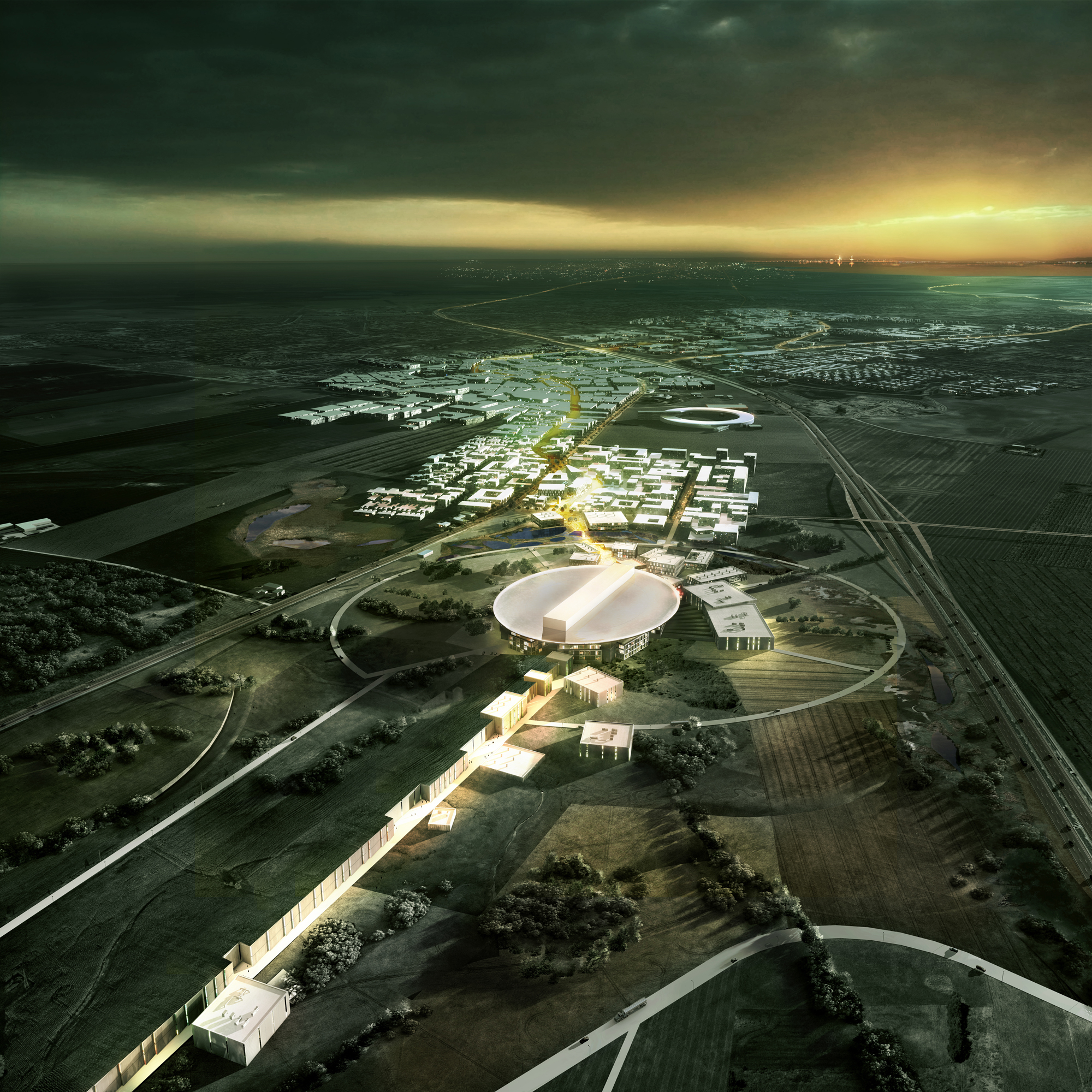
With the major facilities MAX IV and ESS, north‑eastern Lund forms the focal point of Lund Innovation District – an increasingly interconnected arena for innovation actors and one of Europe’s leading academic environments.
This development places LTH at the centre of an area with great potential for, among other things, future materials development – and not, as it may previously have seemed from the Campus perspective, at the periphery of the centre.
Crucial to Lund’s innovation district are the intensity of research and the fact that industry is seeking out the area as an important place for collaboration, future development, and growth.
Ultimately, thanks to the major research facilities in Lund and the environments surrounding them, the world can expect new research breakthroughs and more innovations in sectors such as medicine, manufacturing, electronics, food, and the built environment. In Science Village, excellent research and collaboration can provide answers that lead to improved living conditions – and new, curious questions.
From LTH’s side, we want to work together with other actors in the innovation district to ensure that our research successes in materials and life sciences have the greatest possible impact, and to contribute to the greatest possible societal benefit.
At LTH, we already have advanced materials laboratories. One example is NanoLab, with leading researchers in materials fabrication, particularly in the semiconductor field. LTH also hosts several laser laboratories within the Lund Laser Centre (LLC), where materials can be analysed using, for example, ultrafast light pulses (attoseconds) by world‑leading researchers – indeed, even at Nobel Prize level.
However, the laboratories are now several years old and in need of modernisation, both in terms of new instruments and technological capability, where cleanrooms must meet significantly higher technical standards than those of the existing labs.
LTH wishes to continue contributing to these advances and to ensuring that the potential of the advanced infrastructures is fully realised.
At the same time, an establishment in Science Village brings with it a number of complex challenges – including how to create a cohesive environment for materials science in semiconductor, photon, and laser research. Naturally, such an establishment must also be economically and environmentally sustainable for the operations.
It is absolutely essential to work with a long‑term perspective, which means ensuring that the advanced facilities for materials research are operational by 2030, and that they are designed and planned for needs that lie even further ahead.
Despite the challenges of establishing and constructing new facilities, LTH takes a positive view of the opportunities that we, together with other actors, can create in the innovation district. We envisage how we can collaborate and create synergies in future advanced laboratories offering everything from fabrication, synthesis, and analysis of new materials – to the benefit of both industry and society.
The investments that we and others are making in Lund’s innovation district will generate new materials, new innovations, and new companies – and, not least, contribute to future skills supply for both academia and industry.
The establishment in Science Village is, and has long been, a priority issue for LTH’s management, and Lund University’s leadership and board likewise regard it as an important ongoing matter.
At LTH, we continue our work to evaluate the opportunities that an establishment may bring, with the aim of creating a dynamic environment for interdisciplinary breakthrough research and vibrant innovation.
If we succeed – through broad and committed collaboration with both internal and external partners – the world stands to benefit. For around the major scientific flagships in Lund, we likely have a unique opportunity to shed light on issues such as sustainable materials, precise medicines, and several of the crucial questions of the future.
Annika Olsson
Dean of LTH